
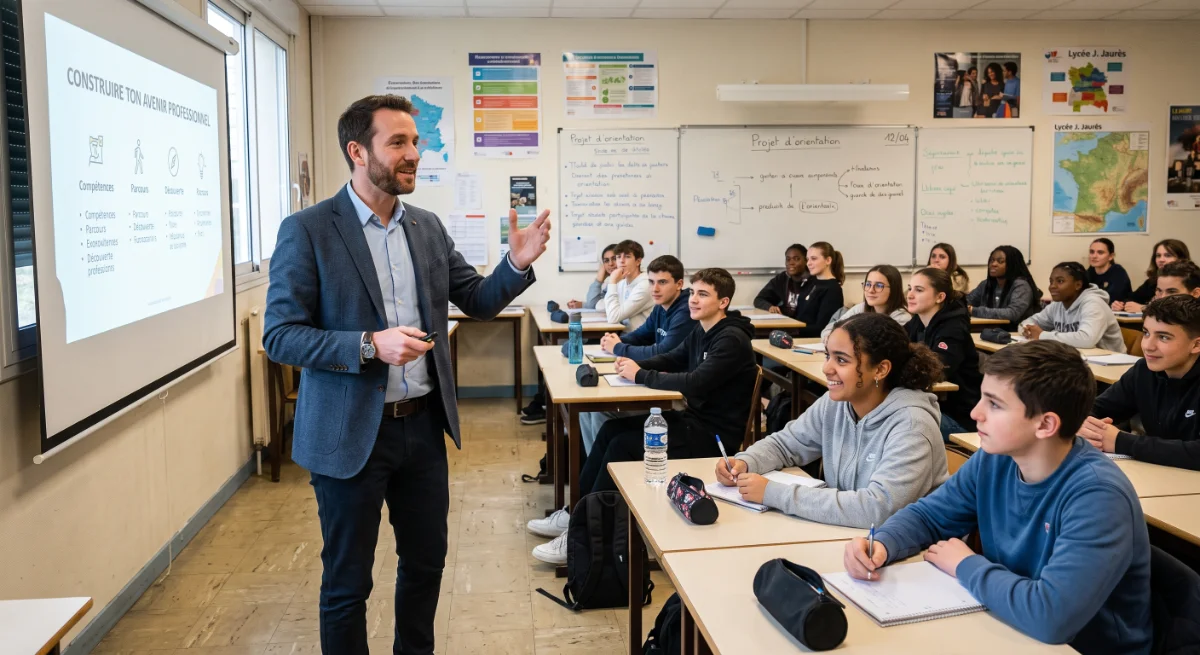
Cultural intermediation
Your learners ask their questions to someone who lives the subject
You are working on a topic. We find a professional who lives it every day, somewhere in the world, and we organise their session, by video call or on site. You receive the preparation pack beforehand and the follow-up pack afterwards.
From primary school to university, every curriculum, every language taught.
Free quote, no commitment.
"Experiences", "Sharing the planet": the syllabus names the themes, it is up to you to give them a face.
Three situations you will probably recognise.
The subject stays abstract
You have to cover a prescribed topic your learners cannot connect to anything they have lived. The authentic document does half the job, the discussion stalls quickly.
You have neither the network nor the time
Finding a professional abroad, convincing them, fixing a slot across time zones, preparing the group: that is several hours you do not have.
Every expense has to be justified
Your activity budget is tight and is defended on teaching value, not on a nice moment. An outside session that was poorly calibrated, too long or above level, may already have cost you that budget.
How does it work?
This is not a one-off talk. It is a complete teaching sequence built around a real encounter.
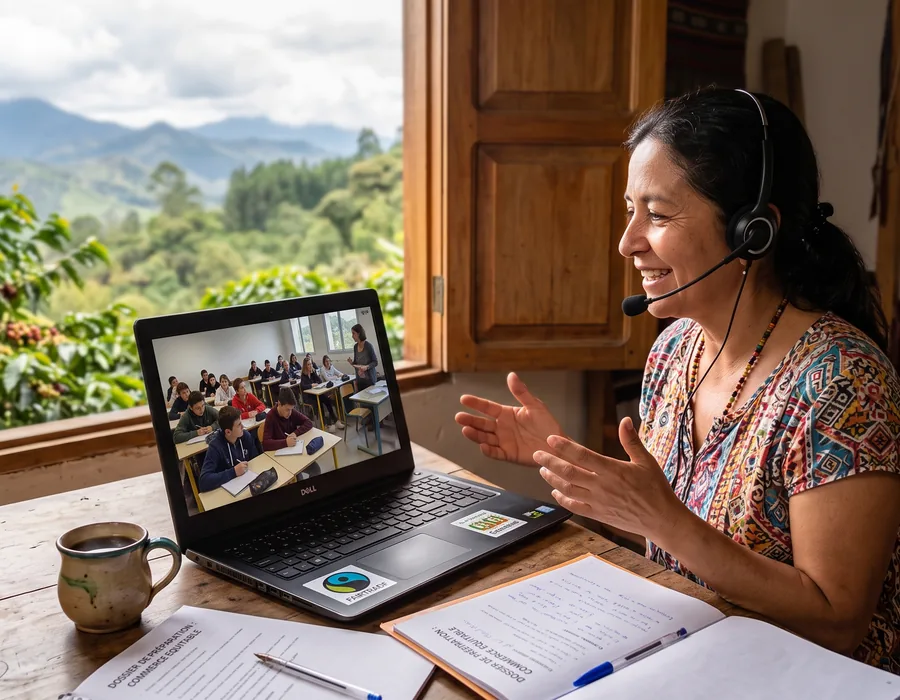
One example, to make it concrete
Your B1 group is working on fair trade. We find a coffee grower from a Colombian cooperative. She joins for 50 minutes by video from her finca, answers the questions your learners have prepared, and you receive the preparation pack two weeks before and the follow-up pack the next day.
Before
Delivered 15 days ahead
A preparation pack, as an editable PDF, which you can adapt if you wish.
- Background on the speaker and their occupation
- Topic vocabulary, calibrated to the group's level
- Trigger documents
- Warm-up activities
- A workshop for learners to prepare their questions
During
45 to 60 minutes
The session, by video call or on site. A professional speaking from their work, not from a podium.
- A presentation anchored in the real: their workplace, their gestures
- Time for exchange with the group, always planned in
- Speaking pace adapted to the level you state
- Technical test a few days before, fallback plan in place
After
The next day
A follow-up pack, to turn the encounter into assessable work.
- Written and spoken production activities
- A final task, tied to your topic
- Assessment grid, criteria and descriptors
- Extensions for the following lessons
The typical timeline
Day 0
You describe your project
Next step
Quote and speaker profile
Following week
Date and format confirmed
Day minus 15
Preparation pack
Session day
The session
Day plus 1
Follow-up pack
Topics
Every topic is possible. Those below are examples, grouped into six broad fields for readability.
Each example comes in three activities, from A1 to C2: the subject does not change, only the pace, the kind of speaking involved and the expected output. These fields match no particular syllabus. Each session is then tied to the thematic grid of your own programme, to its strands or its units.
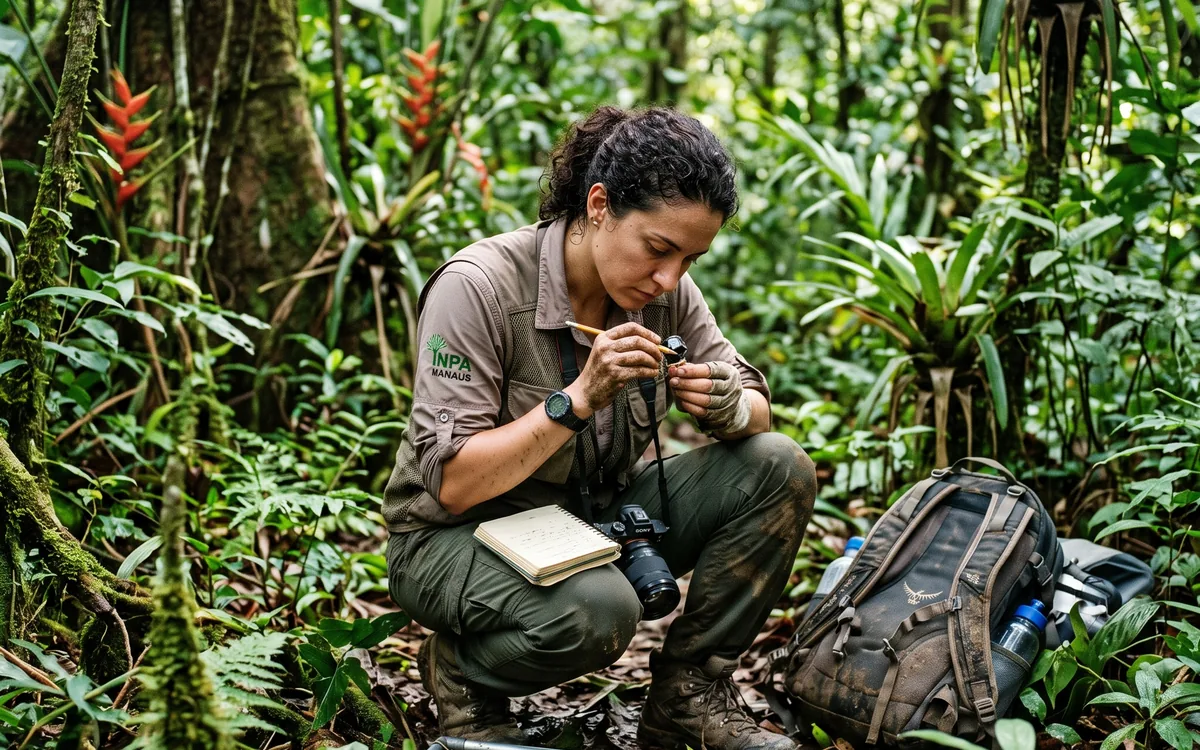
Environment and resources
What climate figures become when someone observes them in the field.
- A1 – A2A biologist in the Amazon shows and names what he observes: students complete an illustrated observation sheet.
- B1 – B2The manager of a recycling cooperative traces the journey of a discarded bottle: the group reconstructs the stages and presents them.
- C1 – C2A water management engineer sets out a conflict of use over a river: a debate on the trade-offs and an analytical note.

Food, farming and trade
What is in a plate and in a price, explained by the people who produce them.
- A1 – A2A chef presents the produce from his market: students build an illustrated recipe and present it orally.
- B1 – B2A coffee grower breaks down the price of a bag: interview in pairs, then a written report.
- C1 – C2An agronomist on the food sovereignty of a country that imports its flour: an argued synthesis based on the exchange.

Work, occupations and careers
Occupations told from the inside, with their real days and their constraints.
- A1 – A2A mountain guide narrates his day in pictures: students reconstruct his schedule and retell it.
- B1 – B2Someone who became an entrepreneur abroad: the group prepares the interview and then writes her profile.
- C1 – C2A recruiter who hires young people into their first job: students sit a mock interview, then analyse what worked.
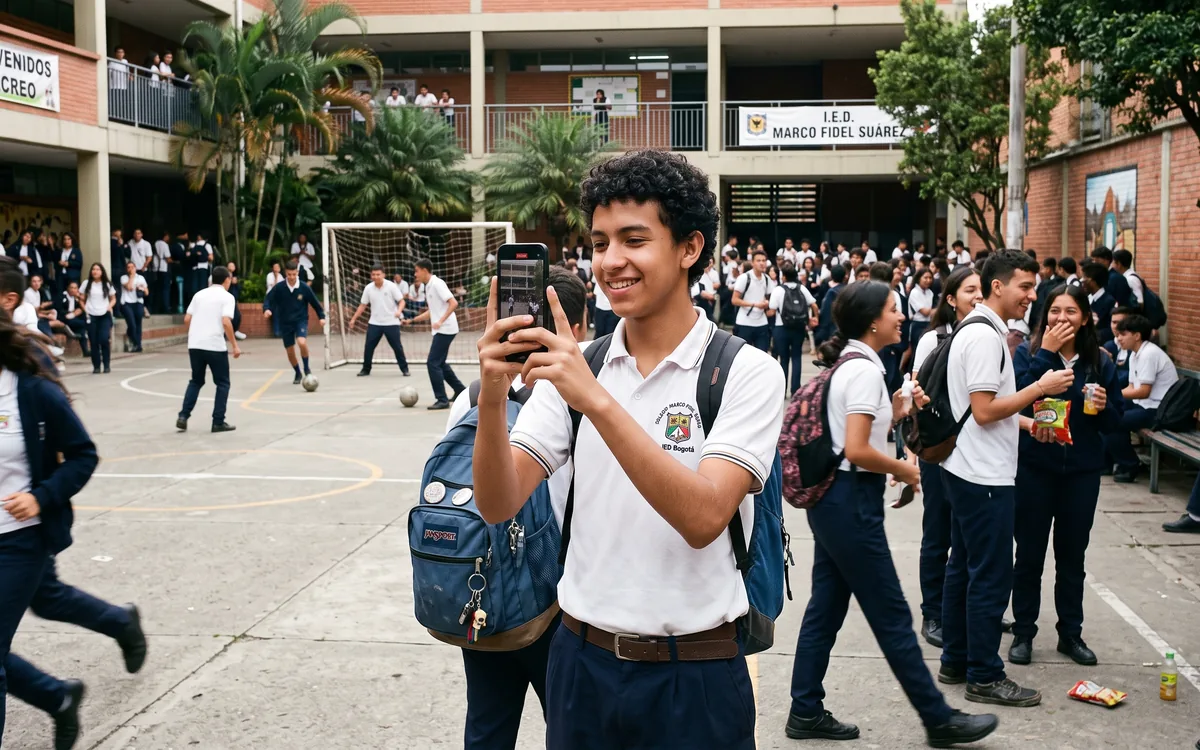
Identities, migration and intercultural life
What is at stake when two cultures meet, work together or translate each other.
- A1 – A2A secondary student in the partner country films his school day: students compare timetables, meals and break times with their own.
- B1 – B2An anthropologist on cultural codes at work: role plays of real situations, then a group debrief.
- C1 – C2An interpreter on what is lost between languages: students compare two translations of the same passage.

Arts, creation and heritage
Creation seen from the workshop, the studio or the restoration site.
- A1 – A2A dancer shows three movements and their meaning: students describe them, then present a dance from their own culture.
- B1 – B2A video game developer explains how an interactive story is built: the group writes and pitches its own scene.
- C1 – C2An art restorer on the decisions a retouch involves: a debate on the limits of restoration.
Society, news and citizenship
Institutions and the news, described by the people who keep them running.
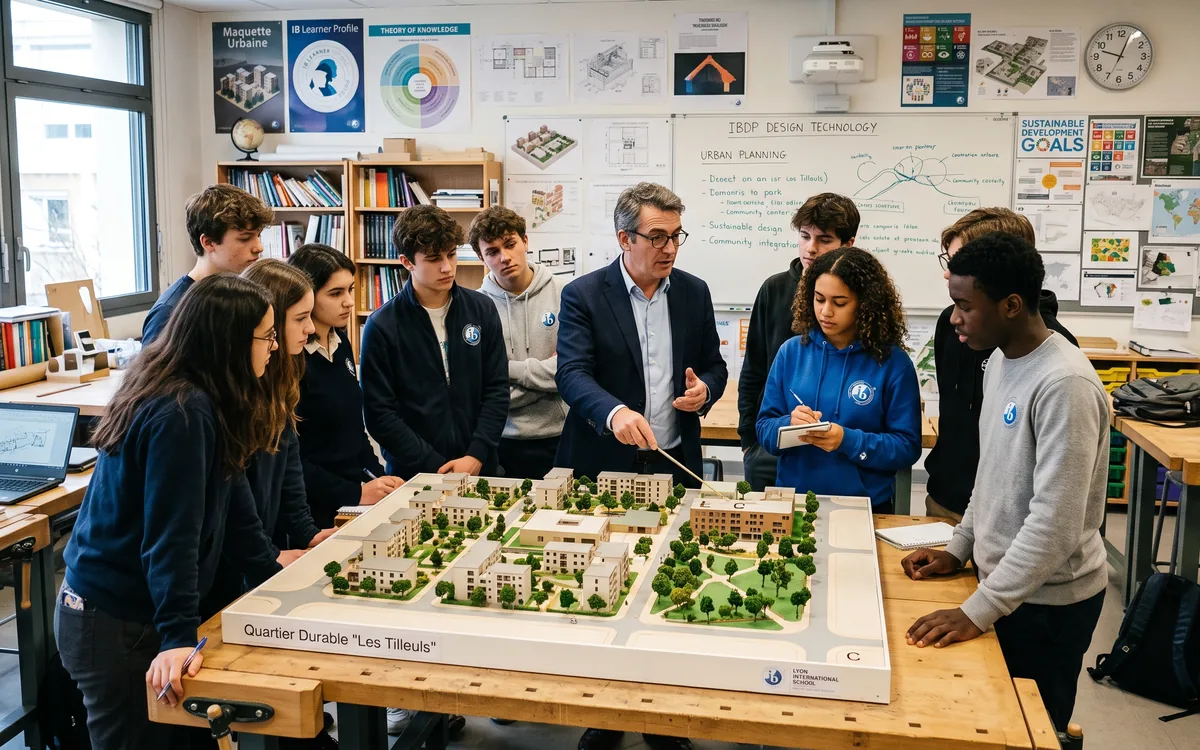
- A1 – A2An urban planner comments on the map of her district: students describe theirs and propose a simple improvement.
- B1 – B2A journalist shows how he verifies a piece of information: the group applies the method to an article of its choice.
- C1 – C2A content creator on what she posts and what she keeps to herself: a debate on the line between private life and life online.
You state the group's actual level in your request, including when it is mixed. We calibrate the pace, the vocabulary, how long the speaker talks and the type of activity accordingly.
In higher education, the entry point can also be the students' own discipline rather than a language topic: law, international business, environmental science, health, arts, engineering.
Settings covered
Adapted to your setting
Every session is calibrated to the actual audience. We adjust the length, the speaker's pace and the vocabulary of the preparation pack to the level you state, and the final task and form of assessment to what you need learners to produce.
Institutions
Programmes and courses
Levels
This list is not exhaustive. If your setting is not on it, it still qualifies.
The session is held in the target language, with pace and vocabulary adapted. If the group's level requires it, we provide interpretation during the encounter.
Formats and practicalities
Two formats, and what each one requires on your side.
Video call
- Typical length
- 45 to 60 minutes, exchange time included.
- Recommended group size
- A single group of up to about thirty participants, where direct exchange stays fluid. Larger formats, a lecture hall or several groups together, are possible provided question time is organised differently, for example with questions collected in advance.
- Equipment needed
- A stable connection, a projector or screen, speakers, and a room microphone if the group is large. We provide the connection link.
- Booking lead time
- Three weeks minimum, four to six weeks recommended for a very specific topic.
- Geographical reach
- Any country, provided a workable shared time slot exists.
On site
- Typical length
- 60 to 90 minutes, workshop format possible over half a day.
- Recommended group size
- A single group of up to about thirty participants. Larger formats remain possible, with question time organised in advance rather than by raised hands.
- Equipment needed
- A room, a board, and any equipment specific to the session where relevant: a kitchen, space to move, work tables.
- Booking lead time
- Six to eight weeks, the time needed to confirm the speaker's availability and travel.
- Geographical reach
- It depends on where the speaker we find for you is based. On-site sessions are therefore not guaranteed for every topic. We tell you at the proposal stage, without keeping you waiting.
On time zones: slots with Latin America fit easily into a European morning, which is late morning there.
For companies
A team activity that leaves more than a group photo
We organise cultural activities led by professionals in their field. Teams make something with their hands, taste, move or talk with someone from elsewhere. We coordinate the practitioner, the equipment and the run of the session.


World cooking workshops
A cook guides the team through a dish, from prep to sharing. Everyone cooks, nobody watches.
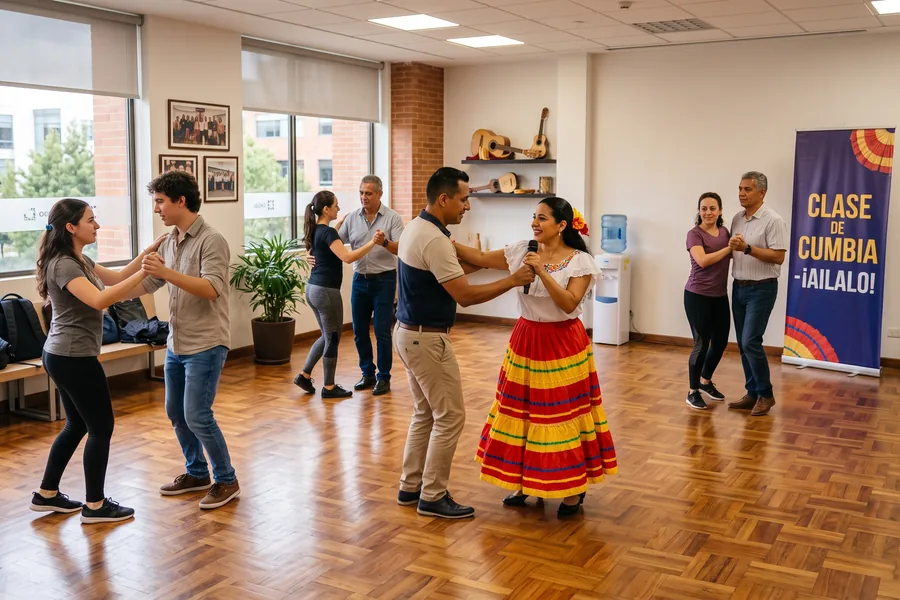
Dance introductions
Salsa, cumbia, Afro-Caribbean dances. As a group, no prerequisites and no levels.
Guided tastings
Specialty coffee or cacao, with a live link to the producer during the tasting.
Craft
Ceramics, textiles, basketry. Everyone leaves with what they made.
Intercultural talks
How to work with teams from several cultures without piling up misunderstandings.
Career encounters
A professional from another country talks about their daily work by video, from their workplace.
Typical occasions: an offsite, an onboarding day, a diversity and inclusion week, a wellbeing-at-work initiative, a staff committee event, an end-of-year celebration.
Request a proposalGround rules
What we do not do
Four deliberate refusals. They share one reason: without them, the encounter produces nothing in class.
-
01
Replace a lesson
The session fits into your progression, it does not stand in for it.
-
02
Provide a speaker in under two weeks
Finding the right professional and briefing them takes that time.
-
03
Run a session with no preparation beforehand
Without a pack worked through before the lesson, the encounter falls flat.
-
04
Work with less than 45 minutes
Below that, no real exchange time with the group is left.
Describe your project
The more precise your request, the more useful the proposal. We will get back to you with a suggested speaker profile and a quote. Nothing is binding at this stage.
Frequently asked questions
Do you work with every type of institution?
Does this suit higher education?
How far in advance should we book?
How do you find the speaker if the topic is very specific?
Which language is the session held in?
What exactly is in the packs?
How much does a session cost?
What happens if the connection fails on the day?
Does it work with an A2 group?
Can we arrange several sessions over a year?
Tell us your topic, we will find the person who lives it
Your topic, a professional who practises it, online or on site, with the preparation and follow-up packs.
Describe my project